

Why AI Adoption Fails After the Rollout
AI rarely fails on launch day.
Licenses are purchased.
Training sessions are scheduled.
Internal announcements go out.
Leadership signals urgency.
There is energy.
There is curiosity.
There is optimism.
And then — quietly — adoption slows.
Usage becomes uneven.
Certain teams experiment.
Others hesitate.
Shadow AI emerges in pockets.
Executive confidence weakens.
The problem is not the tool.
It is what happens after the rollout.
The Rollout Myth
Most organizations treat AI like traditional software deployment.
Select the vendor.
Negotiate enterprise pricing.
Provide training.
Enable access.
This approach worked for ERP systems.
It worked for CRM platforms.
It worked for document management tools.
AI is different.
AI is not a static system.
It is an adaptive capability.
And capability requires ownership, structure, and integration.
When AI is treated as software instead of operational redesign, adoption plateaus.
What Actually Breaks After Launch
Across commercial real estate, construction, and distribution firms, the same post-rollout failures appear repeatedly.
1. No Executive Owner
AI often launches through IT.
IT secures licenses and defines permissions.
But adoption rarely belongs to operations.
Without a defined executive owner:
• Usage becomes optional
• ROI becomes anecdotal
• Accountability fades
Adoption does not scale on enthusiasm.
It scales on ownership.
2. Training Without Workflow Integration
Most organizations run a training session.
Employees learn features.
They test prompts.
They experiment briefly.
Then they return to their existing workflows.
Exposure does not equal integration.
Unless AI is embedded into:
• Underwriting processes
• Estimating reviews
• Forecast modeling
• Reporting cycles
…it remains a productivity accessory.
Not an operational layer.
3. No Defined Performance Metric
Many firms track AI activity.
Few track operational impact.
Leadership dashboards often show:
• Active users
• Prompt volume
• Session counts
But rarely measure:
• Time saved in repeatable workflows
• Cycle time improvements
• Reduction in manual reconciliation
• Decision clarity improvements
Without performance metrics, executive confidence declines.
Usage is not value.
Impact is.
4. Governance Lags Behind Usage
High-performing teams will always seek leverage.
If leadership does not define AI boundaries, teams define them independently.
Shadow AI grows not from rebellion — but from ambiguity.
When governance lags:
• Risk exposure increases
• Data handling becomes inconsistent
• Trust erodes
Structure stabilizes adoption.
Restriction does not.
The Real Reason Adoption Fails
AI adoption fails when:
• Ownership is unclear
• Workflows remain unchanged
• Measurement is absent
• Governance is reactive
It fails when AI is positioned as a tool upgrade rather than a leadership decision.
AI requires:
Alignment.
Redesign.
Discipline.
Measurement.
It is not implemented once.
It is architected.
From Rollout to Operational Advantage
Organizations that move beyond rollout do three things differently:
- Assign executive adoption ownership
- Redesign workflows before scaling training
- Define measurable performance indicators
AI adoption is not a technology problem.
It is a structure problem.
When structure precedes scale, results compound.
When structure is ignored, adoption stalls quietly.
A Better Question
Instead of asking:
“Did we deploy AI?”
Leadership should ask:
“Did we redesign how we operate with AI?”
The difference determines whether AI becomes:
An expense
or
an advantage.
If AI feels active but unfocused inside your organization, the issue is rarely the model.
It is what happened after the rollout.

Standing at the AI Crossroads: Why Waiting Could Be Dangerous
I’ve spent over 15 years in senior leadership roles, and in 2022, I began a deep dive into the wor

AI Fuels Midwest Industrial Growth: Missouri Leads the Charge
When national headlines talk about AI, most eyes turn to Silicon Valley or New York. Yet some of the
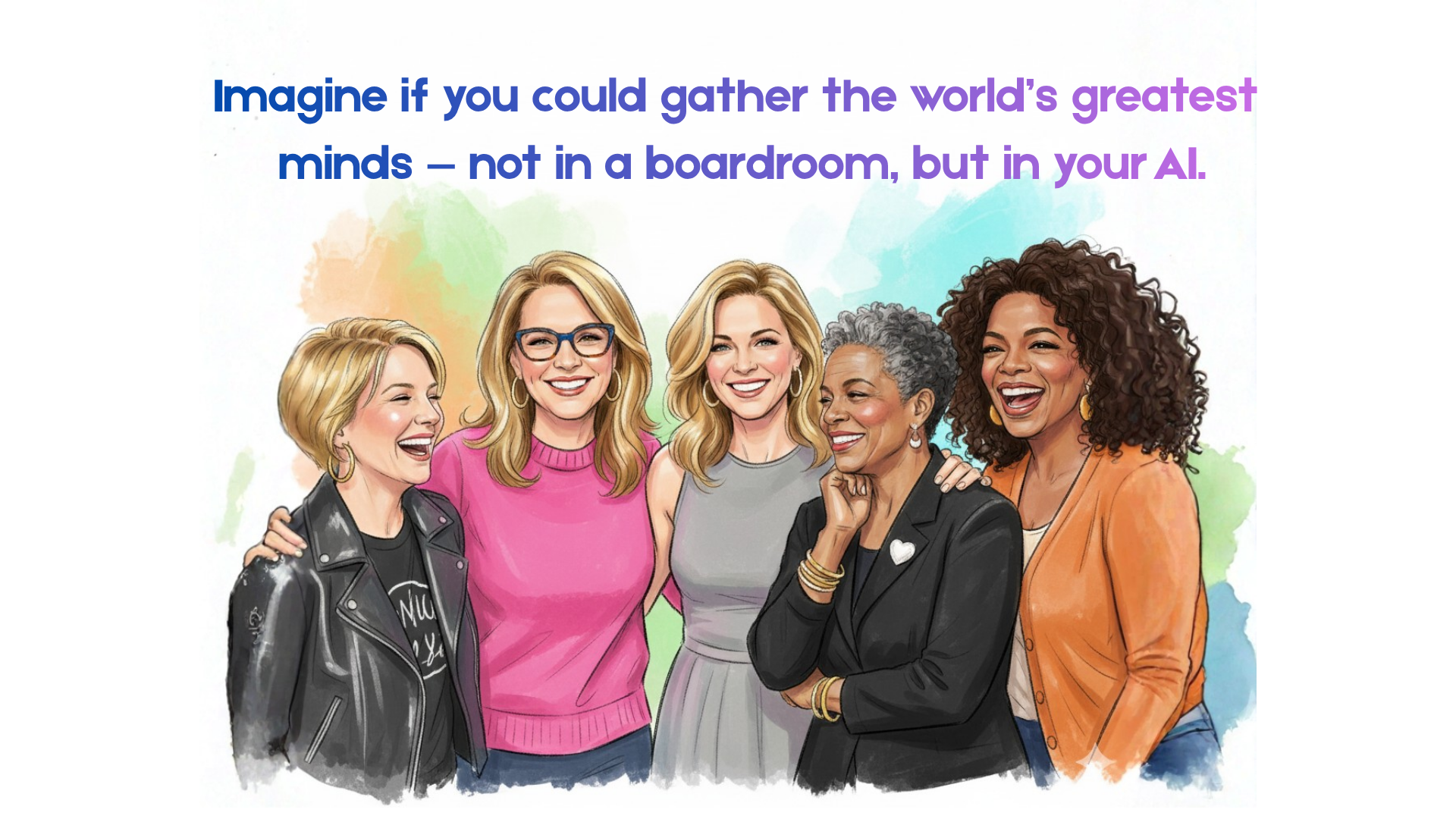
Imagine if you could gather the world’s greatest minds — not in a boardroom, but in your AI.
Why generic AI fails to deliver true insight—and how a human-centered approach to AI delivers meas