
What Decades of Working With Hot Glass Taught Me About Artificial Intelligence
How an unconventional background became the foundation for a different kind of AI practice
I have been training for AI strategy for decades. I just did not know it.
When people hear that I help organizations adopt artificial intelligence, they expect a background in computer science or data engineering. They do not expect to hear about furnaces, molten glass, and ceramic molds.
But that is where this story starts.
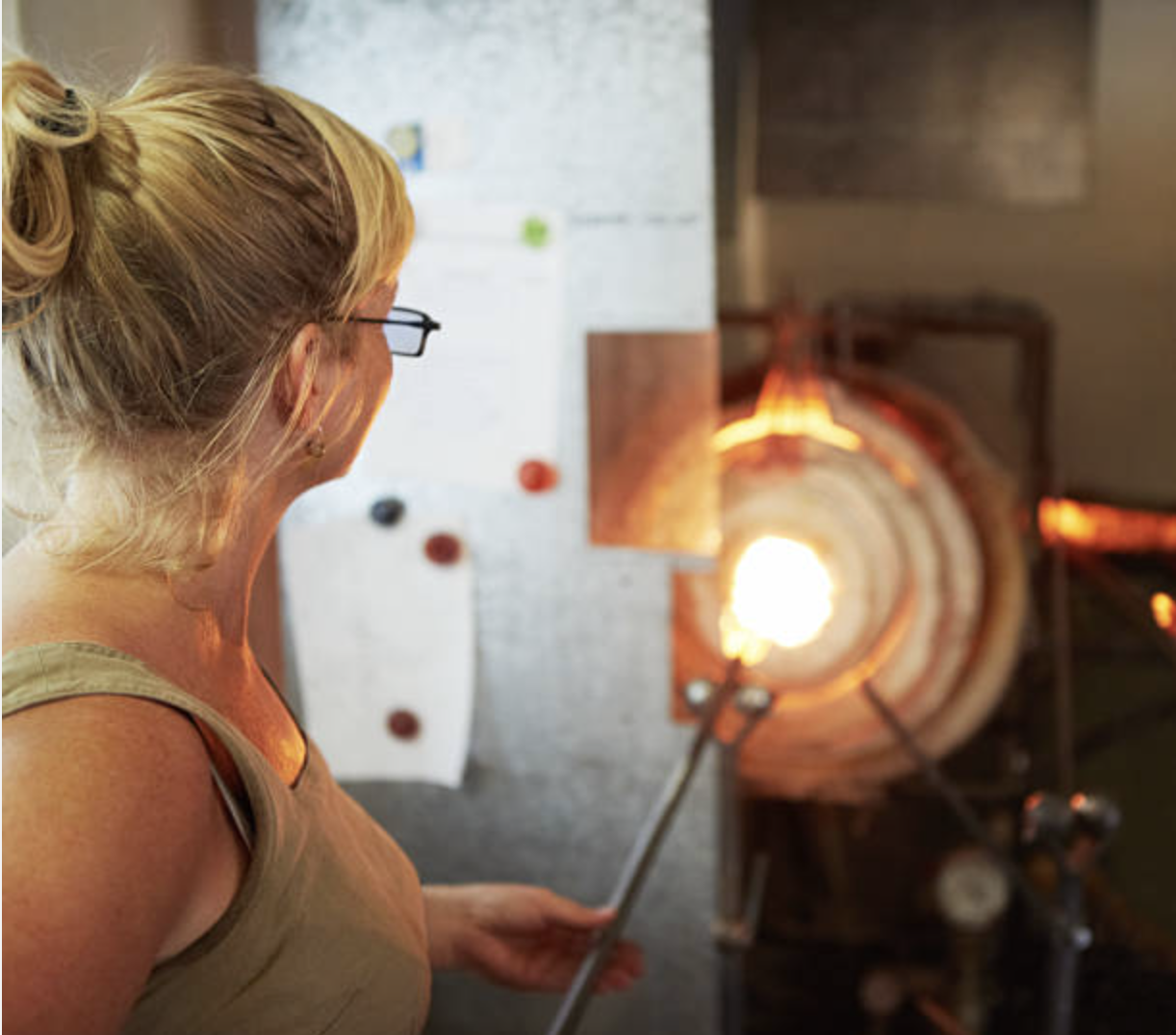
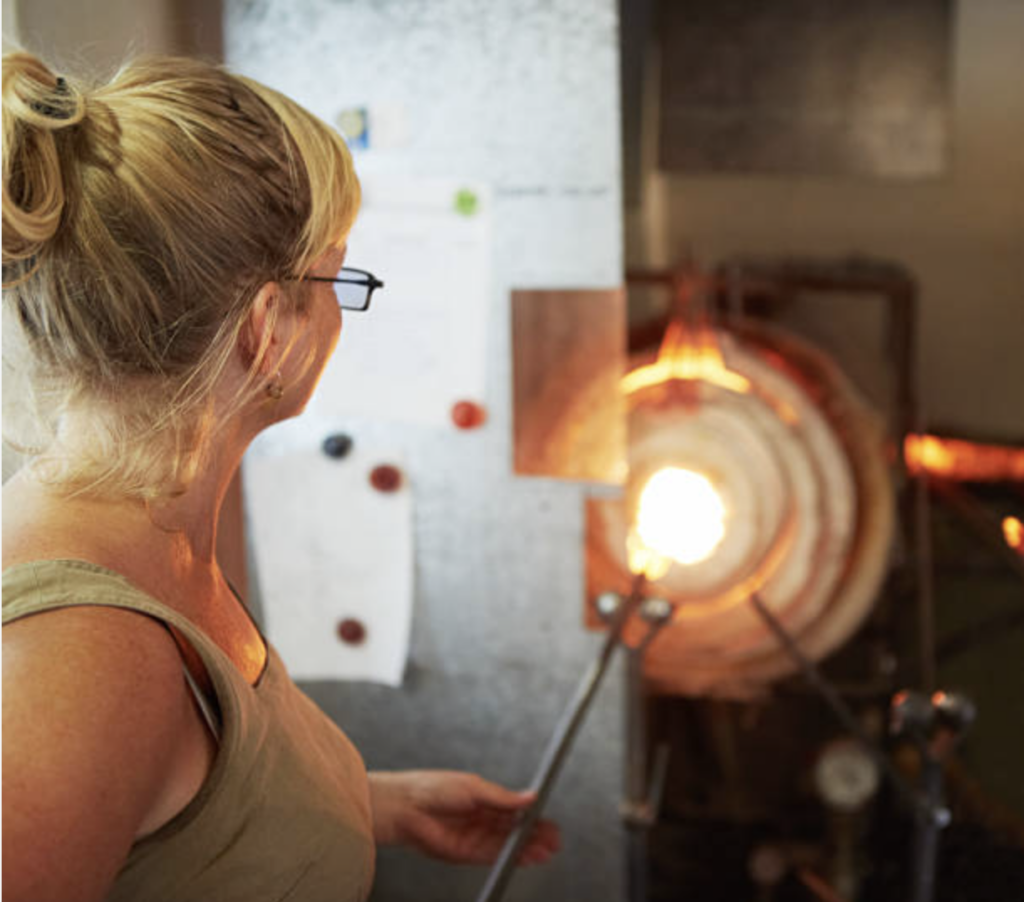
I began working with glass in graduate school and never stopped. My graduate work was in glassblowing, the traditional hot shop where teams work together around roaring furnaces and molten glass glows at the end of a rod.
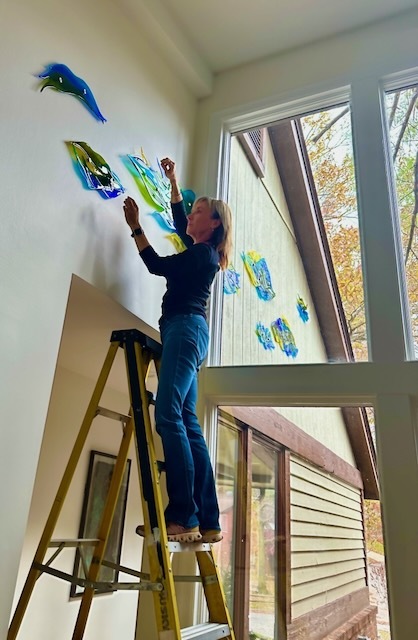
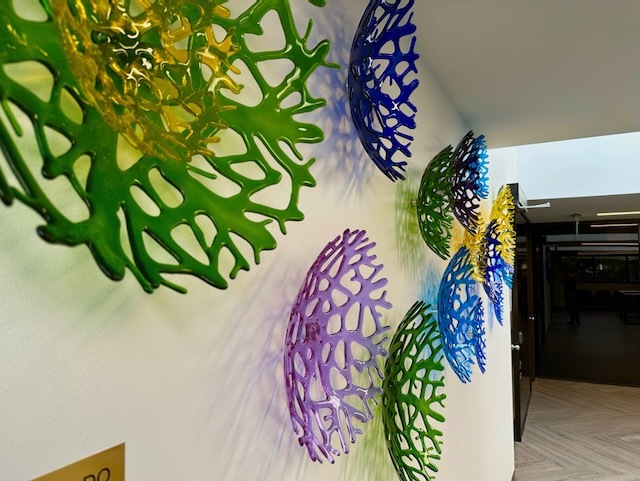
Glass has never been a casual hobby. Over the decades my work has been collected internationally, placed in a museum, and published in books. I have been honored more than once as a representative voice in contemporary glass. My installations live in hospitals, corporate spaces, and private collections across the world.
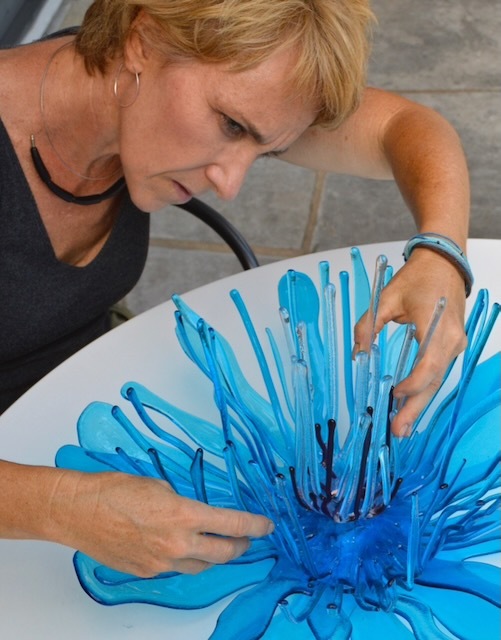
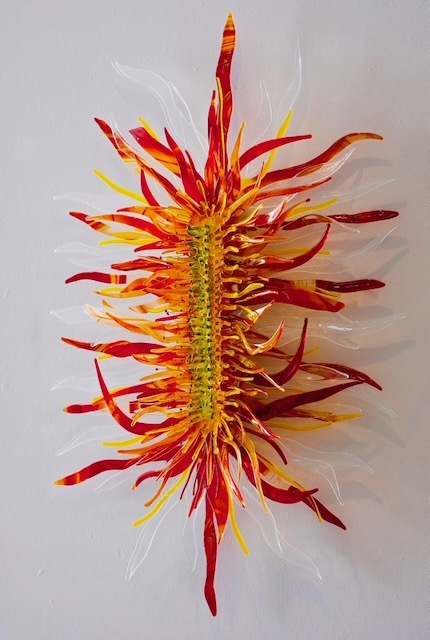
Today my studio practice centers on kiln-formed glass. I build complex ceramic mold systems and assemble thousands of individual pieces of glass that melt together slowly inside a large kiln. The finished work captures light, reflects color across a wall, and changes throughout the day as the sun moves through a space.
For many years architects and designers commissioned these works for the built environment. Those relationships eventually led me into consulting, teaching, and working inside organizations that design complex systems.
That trajectory carried me, decades later, to founding Spark AI Strategy, where I help organizations adopt and work with artificial intelligence.
At first glance, the two disciplines appear unrelated.
The longer I work in this space, the more I recognize something unexpected: the way I think about glass is the same way I think about AI.
The work begins before the material
When people watch a glass artist, they imagine the dramatic moment the material is touched.
The reality is quieter.
Every piece starts with conversation. I talk to the client. I talk to the architect. I ask about the space, the light, the way people will move through the room. I listen for what they are really asking for, which is rarely what they say first. Through those conversations I begin to see a version of the finished work in my mind. Not a fixed image. More like a direction. I think about structure and architecture, the parameters of the space, the context the piece will live in, and how it will behave years after I have left the room.
AI adoption requires the same kind of front-loaded thinking, and it starts the same way: with conversation.
Before anyone writes a prompt or deploys a model, I sit with stakeholders and end users. I ask about their goals, their workflows, and where things break down. Through those conversations I begin to see the shape of the solution. Not a fixed blueprint, but a clear sense of where we are headed. What does “good” look like six months from now?
This is the part most teams skip, and the reason most AI efforts stall. The material comes later. The vision comes through listening.
Structure makes transformation possible
Many of my installations rely on carefully engineered ceramic molds that can survive intense kiln heat.
The mold does not create the artwork. But without the mold, the glass has no structure to hold its transformation. Raise the temperature too quickly and the glass cracks. Too slowly and the layers never fully fuse.
AI works the same way. Prompts, workflows, context, and governance are the mold. They create the structure that allows a system to perform well. Without that structure, the output collapses. I have seen it happen: teams with access to powerful AI tools producing inconsistent results, getting hallucinated data they do not catch, or abandoning the tool entirely because nobody built the container around it. The technology was fine. The structure was missing.
This is something I see consistently in my client engagements. The teams that get real, repeatable value from AI are not the ones with the fanciest tools. They are the ones who built the mold first.

You collaborate with the material
Glass is stubborn and beautiful.
You cannot force it to behave exactly as you imagine. You must understand how it reacts to heat, gravity, and pressure. You learn its tolerances. You guide it. You experiment. Occasionally it surprises you. In all my years of working with glass I have never made two pieces exactly alike. The glass always has something to say about the outcome, and the best work happens when I am intentional about my vision but open to what the material teaches me along the way.
Working with AI has that same quality.
Generative AI even borrows the language. In a kiln, temperature determines whether glass flows smoothly or shatters. In a large language model, a temperature setting controls how predictable or creative the output becomes. Too low and the response is rigid, repetitive. Too high and it loses coherence. In both cases, the practitioner has to understand what the material does at different settings and adjust accordingly. No two outputs are identical, even from the same prompt. It has tendencies you learn through iteration. You have to test its boundaries and stay open to the outcome even when it does not match your original vision.
When I begin working with a new client, the process never starts with the technology. It starts with their people and their current workflow. I need to understand their KPIs, their tech stack, and the way their team actually moves through a day before I open a single tool. From there I back out of the problem and build a solution that fits the workflow they already have, one that increases their efficiency without overwhelming anyone. I train them to communicate clearly with their LLM, to protect their data and privacy, and to repeat the process whenever a new use case surfaces. The goal is to hand them the keys and help them rethink how to break apart a workflow, collaborate with the model, capture the output, and build an expanding web of use cases they can refine over time.
The results I value most happen when we stay curious enough to explore what the system can actually do, rather than forcing it into the shape we assumed it should take.
Engineering matters as much as creativity
A glass installation must stand. It must hang safely. It must withstand stress and weight.
Sometimes that means consulting engineers. Sometimes it means drilling through glass or pressure testing materials so that a structure will survive long after I have stepped away.
One of my most complex pieces is still my favorite. Five feet high, four feet wide, built from thousands of individual pieces of glass fused across multiple layers. Halfway through construction the client issued a change order that required a completely different mounting approach. I had to reverse-engineer my own build, thinking back through every layer of construction to figure out how to drill through seven layers of cold glass without cracking a single one. Glass does not want to be drilled. It has no tolerance for carelessness, and it punishes mistakes instantly. I designed hidden mounting posts set into steel, engineered so that a team of two could lift the finished piece into place and lock it to the wall. To this day it holds. And the light and color it casts across that room is still the most satisfying thing I have ever made.
The art and the engineering cannot be separated.
AI breaks down in the same place. I have seen leadership teams get excited about AI, invest in the tools, and announce the initiative with genuine enthusiasm, only to watch adoption stall because no one planned how to actually train the workforce to use it. The tool sat there. The demos looked impressive. But the people who were supposed to use it every day had no idea how it fit into their work, no governance to guide them, and no one to turn to when the output did not make sense. That gap between executive excitement and daily practice is where most AI efforts fracture. You have to stress test the plan the same way you stress test glass: not for the ideal conditions, but for the real ones. Creativity opens the door. Engineering allows the work to endure.
Light reveals the work
Glass is never static.
A sculpture that looks one way in the morning may look entirely different in the afternoon as sunlight shifts through a room. Color moves. Shadows evolve. The depth of layered glass changes depending on the angle. What appears opaque from one direction becomes transparent from another.
AI reveals itself the same way. A model sitting alone is only potential. It has capabilities that no spec sheet or demo can fully predict. The real meaning surfaces when people begin interacting with it, asking their own questions, testing it against their actual workflows, and discovering use cases nobody planned for. I see this regularly: a team starts using an AI tool for the narrow purpose it was purchased for, and within weeks someone finds a second application, then a third. The system did not change. The people using it simply brought their own curiosity and context to the work.
This is why adoption is as important as implementation. You can build the most elegant AI system in the world, but if no one uses it with curiosity, it remains glass in a dark room.
Human curiosity is the light that reveals the system.
The role of quiet thinking
For many years I have maintained a daily meditation practice. Those quiet moments give my mind the space to connect ideas that were already forming beneath the surface.
Several of my most successful art installations first appeared during meditation. So have some of my best AI strategy decisions. A client problem I have been turning over for days will suddenly resolve itself during twenty minutes of stillness, not because meditation invents the answer, but because it clears away enough noise for the pattern to become visible.
The same thing happened when I founded Spark AI Strategy. After a series of industry layoffs reshaped the commercial real estate landscape around me, I found myself sitting still for the first time in a long time. During that quiet, the concept, the name, and the structure for the company appeared with surprising clarity.
I mention this because the pressure to “move fast” with AI is enormous right now. Organizations feel behind if they are not deploying something immediately. But some of the best strategic thinking I have seen, both in art and in business, comes from people who gave themselves permission to slow down long enough to see the whole picture. In glass, rushing the kiln schedule cracks the work. In AI, rushing adoption without a clear strategy produces the same result.
AI as a creative partner
I often meet people who approach AI with fear, worried it will diminish human creativity.
My experience has been the opposite.
I see AI as a thinking partner. It helps explore ideas, test structures, and refine complex systems. It pushes thinking forward. It allows people to experiment with possibilities that might otherwise stay locked in their imagination.
What I find most satisfying in my work today is helping people discover that for themselves. Whether I am sitting with a small business owner or standing in front of a room of enterprise leaders, the moment that matters most is when the person across from me realizes they can use these tools to build something meaningful.
Not because the technology is impressive. Because their thinking, combined with the right tool, produces something they could not have reached alone.
Human ingenuity is still at the center. AI expands the canvas.
A different material, the same mindset
Looking back, my path from glass artist to AI strategist no longer feels surprising.
For decades I have practiced the same way of thinking: understanding systems, designing structures, imagining experiences before they exist, working patiently with complex materials that transform under the right conditions.
Glass was simply the first medium. Artificial intelligence is another.
Both invite curiosity. Both reward iteration. Both begin with a vision of something that does not yet exist.
Then the real work begins. You set the parameters, build the structure, and create the conditions that allow it to become real.
Michelle Hamilton is the founder of Spark AI Strategy (sparkaistrategy.com) and AI Class Lab (aiclasslab.com).
Proudly, she now leads Change Management and AI Implementation for international AI transformation leader AnswerRocket.
Michelle helps professionals and organizations move from random AI experiments to repeatable systems that produce measurable results. Her decades-long career spanning glass art, commercial real estate, and complex project management informs every engagement: start with structure, stay curious, and never separate the creative from the engineered.

Unleash Your School’s Potential: Why the St. Louis AI Revolution Can’t Wait
Meet Michelle Hamilton, Founder of Spark AI Strategy “We don’t chase shiny objects. We t

Why AI Adoption Fails After the Rollout
AI rarely fails on launch day. Licenses are purchased.Training sessions are scheduled.Internal annou

How to Remain Indispensable in the Age of AI
Artificial intelligence isn’t just about smarter tools—it’s reshaping how we work, live, and g