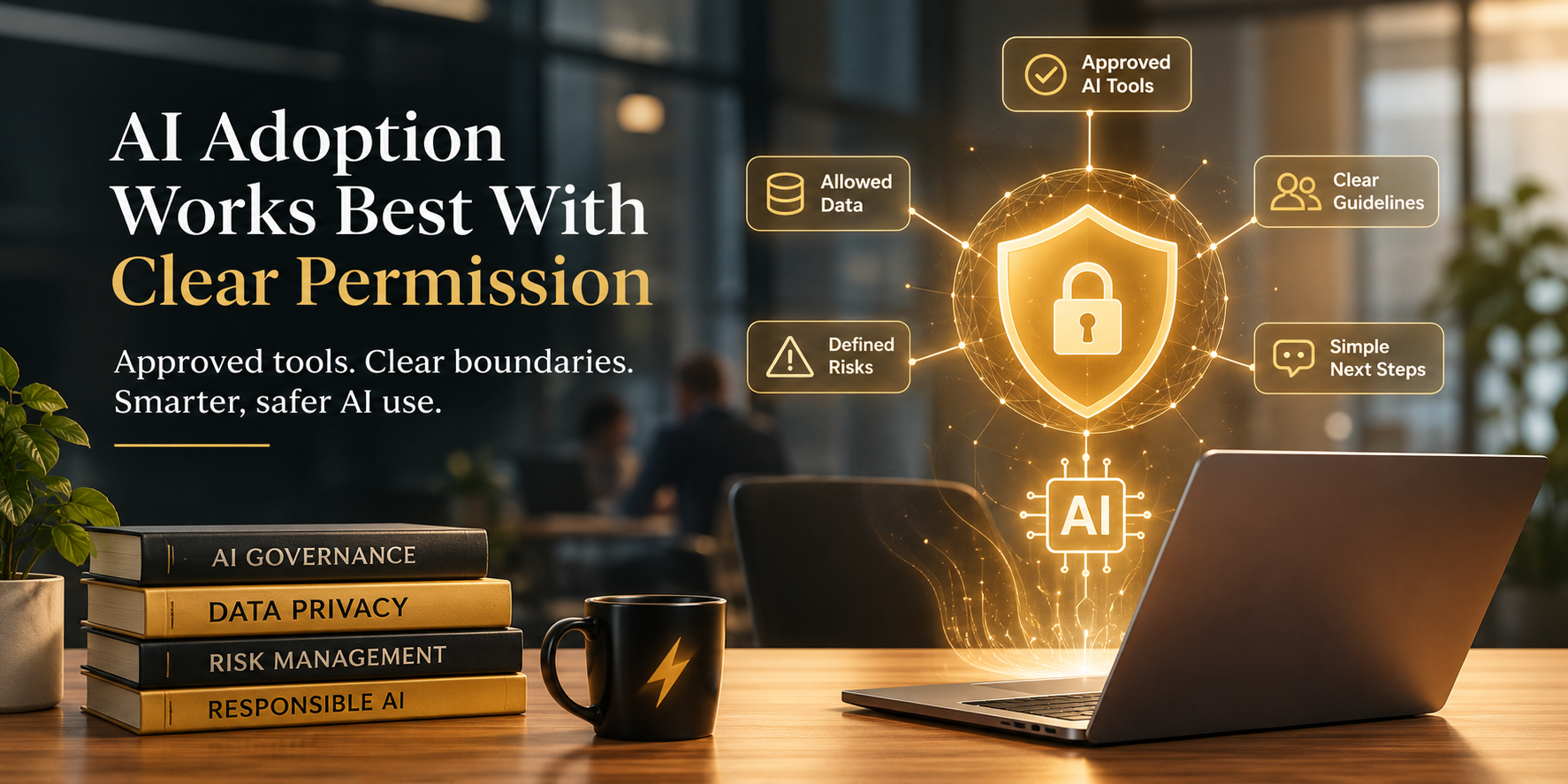
Which tools are approved? What data can people actually feed into them?
Most teams we work with haven't answered either question yet.
That silence feels harmless right up until it isn't. One bad prompt with
confidential data in it isn't a hypothetical risk. It's a liability event
waiting for a Tuesday afternoon when someone's moving fast and pastes in
more than they should.
Nobody's doing this maliciously. They're just doing their job, using the
tool that's sitting right there, without ever having been told where the
line is.
Why this gap is so easy to miss
Most leadership teams assume this is covered, somewhere, by someone. IT
probably has a policy. Legal probably reviewed something. It feels like the
kind of thing that would obviously already exist.
In our experience, it usually doesn't, not in a form anyone's actually
seen. What exists instead is a general sense that people should "use good
judgment," which sounds reasonable until you remember that good judgment
varies wildly from person to person, and nobody's judgment was ever tested
against an actual set of rules.
What this looks like in practice
Someone drafts a client email and pastes in the client's contract terms to
get a faster first draft. Someone else summarizes a sensitive internal
document using a public AI tool because it's the one they're used to at
home. A third person feeds financial projections into an AI model to build
a quick chart for a meeting, without stopping to consider where that data
actually goes once it leaves the company's control.
None of this comes from carelessness. It comes from nobody ever drawing the
line in the first place.
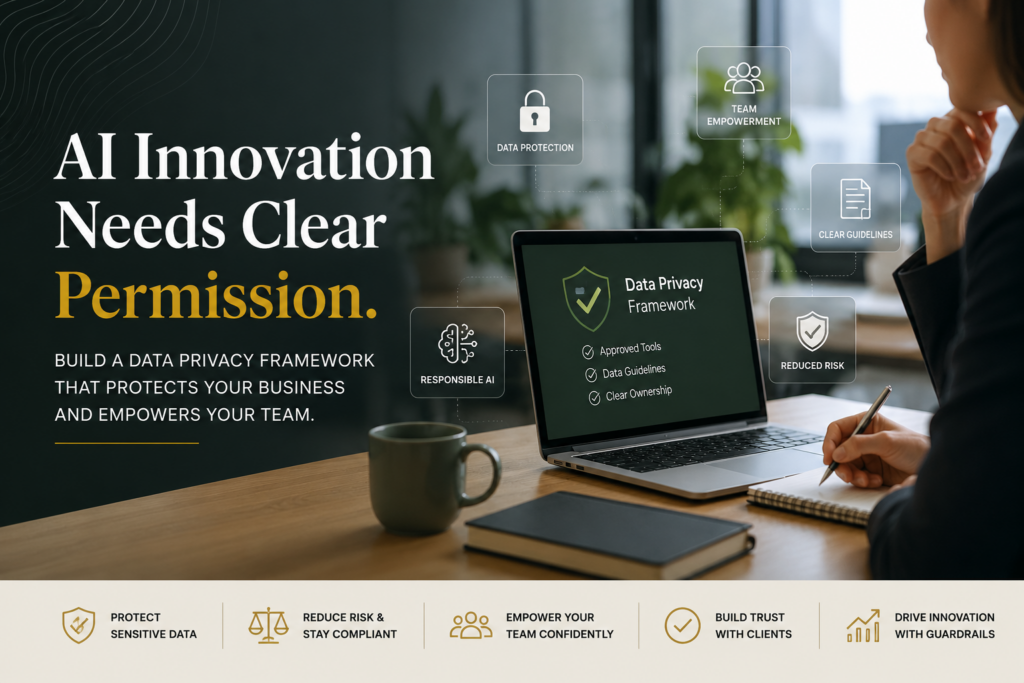
What a real data privacy framework actually needs to answer
Like most governance work, this doesn't need to be complicated to be
effective. It needs to give a clear answer to three questions:
1
Which tools are approved for company use
Not every AI tool handles data the same way. Some train on what you
feed them, some don't. People can't be expected to know the difference
on their own; the framework has to spell it out.
2
What categories of data are off-limits
Client information, financial figures, anything under an NDA, and
personal employee data need explicit, named categories—not a general
instruction to "be careful."
3
What happens if something gets fed in by mistake
Mistakes will happen even with a good framework in place. What matters
is whether there's a clear next step, or whether the mistake quietly
sits there because nobody knew who to tell.
Why waiting for an incident is the expensive way to learn this
Most organizations that build this framework do it after something already
went wrong—a near-miss, a client question, or an uncomfortable conversation
with legal. That's the costly way to learn the lesson.
The organizations that get ahead of this build the framework before the
incident, not after it.
The good news is that this doesn't require a long project or outside
counsel to get a first version in place. It requires someone sitting down
and actually answering the three questions above, in writing, before
assuming the answers are obvious to everyone else.
Where this fits in the bigger picture
Data privacy guidance is part of the Permission stage, the second of five
stages most organizations move through on the way to real AI adoption. It
sits right alongside knowing which tools are approved and who owns unclear
decisions. A team can be enthusiastic and skilled with AI and still be
exposed here, because permission and capability are two different things
entirely.
If your organization has people actively using AI but no real answer to
what data is safe to use, this is worth addressing before it becomes the
incident that forces the conversation.
Free diagnostic · 2 minutes
Find out if this is your organization's real gap
The AI Adoption Scorecard names the exact stage your team is stuck at in
about 10 minutes—not just a guess that something's off.
Take the Scorecard →