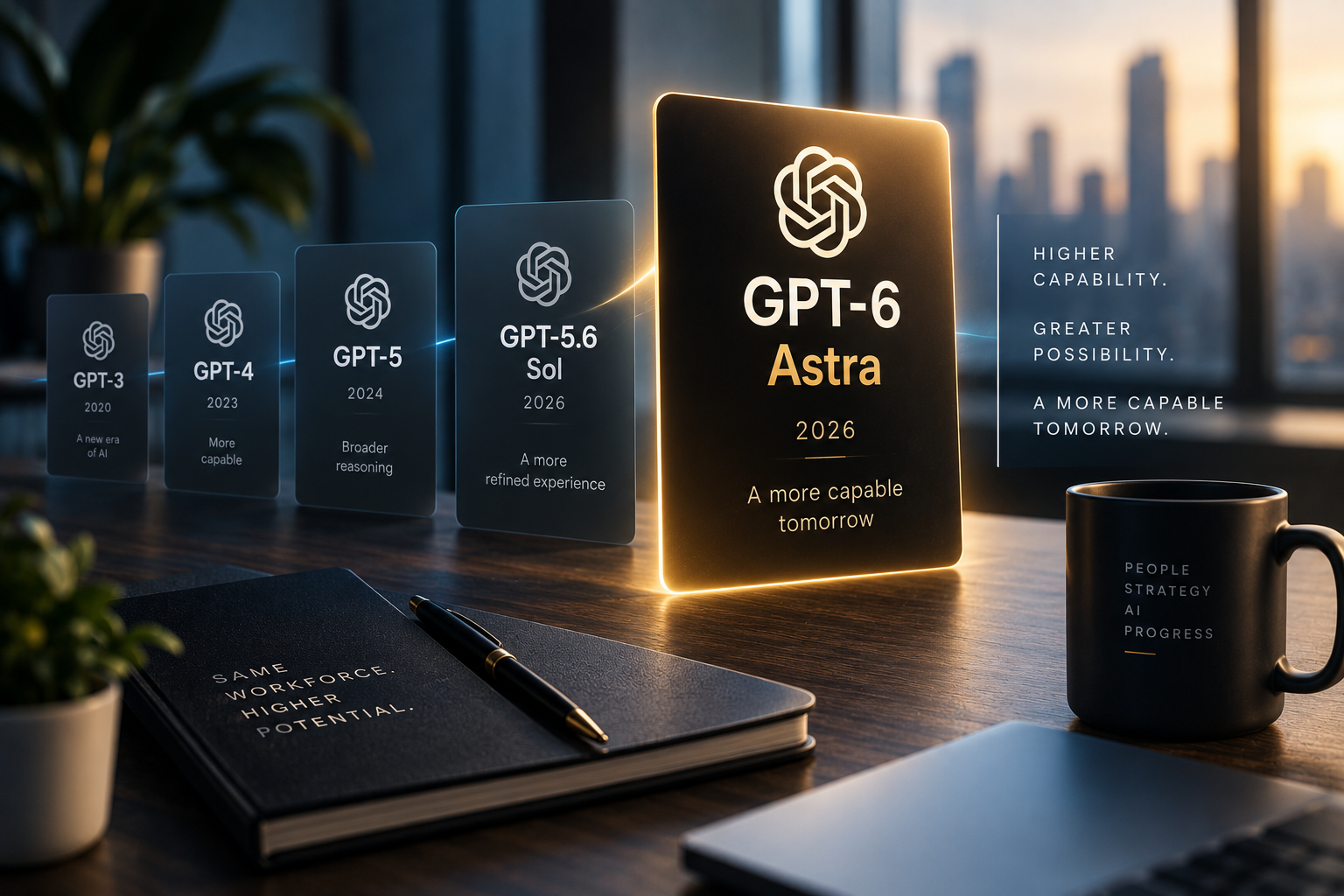
OpenAI released GPT-6 Astra on September 3, 2026. It's a real, significant upgrade, and it's worth separating what's actually confirmed from the AGI headlines that came with it.
The name itself settles a debate that had been running for months. Astra and GPT-6 are the same model. OpenAI is calling it, in its own words, "the world's most intelligent and aligned model." That's a marketing line, but the benchmark numbers behind it are real and worth walking through plainly.
What actually shipped
Astra is rolling out in stages. A limited set of organizations got access on day one, through OpenAI's Daybreak access program. ChatGPT Plus, Pro, Business, and Enterprise users, along with the OpenAI API, Microsoft Azure, and AWS Bedrock, are getting it over the following days. Enterprise access is off by default until an administrator turns it on.
On benchmarks, Astra scored 98% on FrontierMath Tier 4, 99.9% on ARC-AGI-3, and 100% on ExploitBench. OpenAI also says it's nearly twice as fast at computer use as its predecessor, and calls it the best model for software engineering the company has released.
How it compares to the GPT-5 era
GPT-5 first shipped over a year before Astra, and went through several updates of its own before being replaced, most recently GPT-5.6, known as Sol, which had been the stable release since June 2026. Astra is the model that replaces that entire line, not a small step up from it.
| Detail |
GPT-5.6 Sol |
GPT-6 Astra |
| Context window |
Smaller, no confirmed 1M figure |
1,050,000 tokens |
| Max output |
Lower |
128,000 tokens |
| Knowledge cutoff |
Earlier in 2026 |
April 30, 2026 |
| API pricing |
Baseline (promotional) |
2.5x Sol's pricing: $10 / $50 per million tokens |
| Computer use speed |
Baseline |
Nearly 2x faster |
| Cybersecurity capability |
Not flagged |
First model to hit OpenAI's "critical" threshold |
The pricing jump is worth sitting with. Astra costs two and a half times what Sol did on the API, at $10 per million input tokens and $50 per million output, though cached input drops to $1 and batch processing is half price. For a business evaluating whether to upgrade, that's a real cost increase, not a rounding difference.
The part that isn't just a spec bump
Astra is the first model OpenAI has classified as reaching the "critical" cybersecurity threshold under its own preparedness framework. In plain terms, OpenAI says it can find and exploit previously unknown vulnerabilities in well-protected systems without step-by-step human guidance. Its most advanced cyber capabilities are staying limited to a small group of trusted testers for now, gated behind that same Daybreak program.
OpenAI also says the release went through a formal review process with the current presidential administration before launch, and that extra safety checks are built in that can pause or stop tasks in ChatGPT or Codex for review.
OpenAI president Greg Brockman called Astra a "generational leap" and said he personally believes the company has reached AGI. He also said he's leaving it to users to decide whether Astra actually meets that definition.
That's a genuinely unusual thing for a company to say about its own product. Worth reading as a strong claim from an interested party, not a settled fact, regardless of how the benchmarks look.
What this actually means if you're running a business, not a lab
A faster, more capable model is good news in the abstract. It does not, on its own, close the gap between buying access to a tool and actually using it well. The stages that determine whether Astra changes anything for your organization, permission to use it, capability to use it for your specific work, and the habit of actually reaching for it, are exactly the same stages that determined whether GPT-5 or Sol changed anything either.
A model upgrade resets the ceiling on what's possible. It does not reset the floor your organization is actually standing on.